|
March 7, 2006
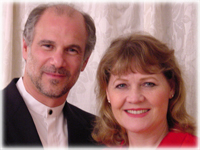
REUVEN & MARY LOU DORON:
"PURIM--A TIME TO FAST, FIGHT, AND REJOICE"
 The
church and Israel are entering the final month of the biblical year, the month
of Adar. Soon we will celebrate the Passover in mid- April, commemorating our
great exodus from slavery, but not before we pass through the grave peril, bold
intercession, unwavering faith, and awesome deliverance as told in the book of
Esther. Before Passover's new beginning comes the great testing of Purim. This
is the season of danger, fasting, confrontation, action, deliverance and
eventual celebration. This is the Month of Purim. The
church and Israel are entering the final month of the biblical year, the month
of Adar. Soon we will celebrate the Passover in mid- April, commemorating our
great exodus from slavery, but not before we pass through the grave peril, bold
intercession, unwavering faith, and awesome deliverance as told in the book of
Esther. Before Passover's new beginning comes the great testing of Purim. This
is the season of danger, fasting, confrontation, action, deliverance and
eventual celebration. This is the Month of Purim.
The Feast is celebrated on the 13th-15th day of Adar, the twelfth month of the
biblical year (March 13-15). It is a joyous celebration of the deliverance of
the Jewish people from total annihilation during the reign of the Persian King
Xerxes I. With Passover beginning on the 14th of Nisan, the first month of the
Biblical year (April 13-19, 2006), Purim comes precisely one month before it,
preparing the way.
Prophetic Shadows of Heavenly Realities
The story of Esther is a prophetic picture in types and shadows of the
intercession of the Bride of Christ on behalf of God's children and the people
of Israel. God's providence shines through this incredible account, empowering
us with faith and courage to stand and believe even when all hope is gone. If
your life and circumstances bear the heavy yoke of hopelessness and impending
calamity, then Purim's message is for you.
This story is rich with powerful and profound prophetic types: Ahasuerus is the
sovereign king reigning over a vast kingdom of many peoples, among them a
remnant of the people of Israel. Vashti, his queen, represents the "ransom
principle," having lost her royal position (and probably her head) to make a way
for Esther who will also risk her life. Both queens had incredible beauty and
courage, and both defied the king's decree--Vashti, by not appearing when
summoned, (Esther 1:12), and Esther, by
appearing unsummoned (Esther 4:16) before
the same violent and volatile king. This true account is far more intriguing and
genuine than the popular soap operas of our day.
Esther, the beautiful and humble maiden of Hebrew descent, is a type of the
Bride of Christ, the glorious Church in intercession. Mordecai is seen in the
role of the Godly Jewish presence that does not bow down to any god but God, and
can lead, train, and exhort the intercessors. His character reminds us that
"all that will live Godly in Christ Jesus shall suffer
persecution" (Titus 2:12) and that there is a price to pay for
serving God in this age. Haman, with his plan to annihilate the Jewish people,
and through them the Messianic line, demonstrates the ever-present anti-Christ
and anti-Jewish diabolical drive.
What's In It for You?
Ahasuerus had been defeated by the Greeks at Salamis in 479 BC. Known for his
emotional extremes, he sought consolation in his harem and threw a grand royal
party in the palace of Susa. Queen Vashti, whose renowned beauty was part of the
program, defied her husband's summons and was consequently deposed and probably
executed.
Esther, raised from obscurity like a biblical "Cinderella," won the royal
"beauty pageant" and, under Mordecai's wise counsel, negotiated the treacherous
and dangerous dynamics of this wicked pagan court. Facing impending genocide by
Haman's vindictive scheme, and empowered by a broad prayer and fasting campaign,
she gained the king's favor and made powerful intercession on behalf of her
people.
It is a tale of danger, treachery, humility, courage, faith, and victory. Like
other Godly women, Esther affected great influence by her beauty of character,
faith, and humble spirit. Many Godly women today can drink deeply from her
character as it is described in (I Peter 3:1-4)
saying,
"In the same way, you
wives, be submissive to your own husbands so that even if any of them are
disobedient to the word, they may be won without a word by the behavior of
their wives, as they observe your chaste and respectful behavior. And let
not your adornment be merely external - braiding the hair, and wearing gold
jewelry, or putting on dresses; but let it be the hidden person of the
heart, with the imperishable quality of a gentle and quiet spirit, which is
precious in the sight of God."
Esther was a woman of valor and action who
didn't shrink back from standing against evil and for the truth, yet she did it
in the right spirit with fasting and prayer.
It is a tale of integrity and faithfulness as Mordecai took his quiet position
protecting the king from an assassination plot without taking any recognition
for himself. The unchanging principle of sowing and reaping is proven in his
life as his righteous acts and Godly choices produced, in time, the blessed
fruit of honor, favor, and high position in the royal court. For some of you who
serve unnoticed and unrecognized in obscure places and difficult circumstances,
remember, "Let us not lose heart in doing good, for in
due time we shall reap if we do not grow weary." (Galatians 6:9)
It is a tale of divine providence, justice, and vindication. Through fasting and
bold intercession, Haman, the arch enemy of God's purposes, was exposed and
defeated. Not only has the gallows he prepared for righteous Mordecai become the
instrument of his own execution, but the entire spiritual atmosphere in the
kingdom changed. According to the king's decree, "The
Jews struck all their enemies with the sword, killing and destroying; and they
did what they pleased to those who hated them" (Esther 9:5), and in
addition, "In each and every province, and in each and
every city, wherever the king's commandment and his decree arrived, many among
the peoples of the land became Jews, for the dread of the Jews had fallen on
them." (Esther 8:17)
The War of the Ages
Haman was of the blood line of the Agagite (Esther 3:1)
whose ancestor was none other than Agag, king of Amalek, Israel's ancient and
ruthless foe. Mordecai, on the other hand, is traced to Kish
(Esther 2:5), a Benjamite out of whose blood
line came King Saul.
Concerning the Amalekites who had been hostile to Israel ever since the early
years of the exodus from Egypt, God commanded King Saul, saying,
"I will punish Amalek for what he did to Israel. Now go
and strike Amalek and utterly destroy all that he has, and do not spare him; but
put to death both man and woman, child and infant, ox and sheep, camel and
donkey." (1 Samuel 15:2-3)
Saul, however, compromised and did not destroy his enemy. In disobedience to
God's Word, he spared the spoils of war and the life of King Agag in a bout of
unsanctified mercy and greed. As a result, not only did Saul lose the throne
(1 Samuel 15:22-23), but Amalek was allowed
posterity, though Agag himself was soon slain by Samuel the prophet. Too often
such political, people-pleasing, and apathetic attitudes toward God's commands
render His people incapable of carrying out His full purposes, forcing the hand
of the true prophetic to do the king's job.
Though Agag was slain, the surviving future Agagite generations continued to be
fueled by the same diabolical hatred, and the campaign against the people of God
continued on and on. Nearly five hundred years after Saul's compromise we find
Mordecai and Haman, both of the blood lines of Saul and Agag, yet again locked
in this mortal battle of the ages. In other words, the war will go and on, from
generation to generation, until the enemy is utterly destroyed!
Our failure to execute God's judgment over evil, especially over our own sin and
compromise, will only perpetuate its destructive impact and invite graver
visitations upon our descendants. Unchecked and unrepented sin only escalates
and increases over time, and the prophetic admonition is alarming which says
that "They sow the wind, and they reap the whirlwind."
(Hosea 8:7)
No amount of whitewashing, denial, or guilty silence can put an end to this
unrelenting flood of death. According to God's word, only confession and
repentance break generational curses and harmful genealogical tendencies. If we
don't repent of our sins, our children and children's children will pay the
price.
The Intercession of the Bride
It was the 13th day of the month of Adar which Haman had selected for the
annihilation of the Jewish population of the Persian Empire. Authorizing Haman's
request, the king issued a royal decree sealing the fate of his Jewish subjects.
Queen Esther, however, who was already providentially positioned in the palace,
interceded before the king and saved her people. Her weapons were humility,
beauty, fasting, faith and great courage (Esther
4:14-17).
Esther's Hebrew name was Hadassah--meaning a Myrtle tree: a low tree (humility)
with shining green leaves adorned with snow white flowers (purity) bordered with
purple (royalty) emitting an exquisite perfume--yet her Jewish identity was kept
hidden. She is pointing prophetically to the true Church who also is of Hebraic
roots though called to a Heavenly position. Regardless of her royal office,
however, Esther would not have escaped the fate of her Jewish brethren should
Haman's plot have succeeded, just as today the true Church is directly linked to
the people of Israel and their fate.
Other than the intercessory ministry of the Lord Jesus Himself, we cannot find
in the Word of God a more dramatic, dangerous, or powerful intercession than
that of Esther. Among the great intercessors of the Bible, none other portrays
so clearly and vividly the position and the ministry of the true Church toward
God on behalf of His people Israel. A comprehensive teaching of this prophetic
feast is found in our book One New Man available through the Elijah List
at:
www.elijahshopper.com/detail.aspx?ID=2302 or by clicking on one of the
buttons in the ad below.
The Right to Suffer and to Fight
Responding to the beauty, courage, and powerful intercession of his bride, and
seeing the true treacherous nature of Haman, the king issued a second royal
decree overriding the first one which sanctioned the annihilation of the Jewish
people. This second decree now authorized and deputized these very victims to
rise up, assemble together, pursue, and destroy their enemies. The king granted
the Jews who were in each and every city the right to assemble and to defend
their lives, to destroy, to kill, and to annihilate the entire army of any
people or province which might attack them and to plunder their spoil.
(Esther 8:11)
In fact, the king's first decree, though seemingly fatal, served to expose and
flush out the enemies of God's people so that these very enemies themselves
might be destroyed at the second decree. The end of the story is in the hand of
the Lord, and those of you who have suffered under the enemy's oppression will
be given authority to pursue and conquer your foes as you do it God's way.
"Therefore
humble yourselves under the mighty hand of God, that He may exalt you at the
proper time, casting all your anxiety on Him, because He cares for you. Be
of sober spirit, be on the alert. Your adversary, the devil, prowls around
like a roaring lion, seeking someone to devour. But resist him, firm in your
faith, knowing that the same experiences of suffering are being accomplished
by your brethren who are in the world. After you have suffered for a little
while, the God of all grace, who called you to His eternal glory in Christ,
will Himself perfect, confirm, strengthen and establish you." (1 Peter
5:6-10)
Your
Vindication Is In Him
Prophetically, the month of Adar is a season of great danger, fierce battle, and
eventual victory; a season of fasting, fighting, and ultimately rejoicing. Those
who call upon the name of the Lord today, and are led by the wise counsel of His
Spirit, are also in a position to enter into bold intercession before the King
of Kings. The enemy has pronounced murderous plots against many and has set
deadly traps in your path. But God, who is sovereign over all, has promised to
pass judgment in favor of the saints.
So great was the victory and deliverance of God's people that
"Mordecai recorded these events, and he sent letters to
all the Jews who were in all the provinces of King Ahasuerus. obliging them to
celebrate the 14th day of the month Adar, and the fifteenth day because on those
days the Jews rid themselves of their enemies, and it was a month which was
turned for them from sorrow into gladness and from mourning into a holiday."
(Esther 9:20-22)
The story came to a joyous conclusion with a great victory and deliverance as
the "formula" of humility + integrity + fasting + intercession was proven
successful. The sovereign king granted the Bride's powerful intercession; the
enemy's plans were turned upon himself; and all things worked together for good
for those who loved God and remained true to His purposes. And yet, this great
intercession still stands to be fulfilled one last time at the end of this age.
A Bride of Hebraic roots, most excellent of maidens, prepared and perfected for
royalty, will yet enter the presence of The King of Kings and make a powerful
intercession on behalf of His people Israel. The fate of the people will once
again rest in the heart of the Bride. Are you willing to join those who
celebrate this coming prophetic Purim?
In His grace,
Reuven and Mary Lou Doron
One New Man Call
P.O. Box 164
Hayfield, MN 55940 USA
email: OneNewManMail@aol.com
|